Why We Started Doing Things Apart — And How It Made Everything We Do Together So Much Better
There's this weird pressure that comes with being a couple who does basically everything together. You travel together, you work together, you run a website together. And somewhere along the way, it becomes almost taboo to say out loud: I need a minute to myself.
For a long time, neither of us said it. Benny would get quiet and I'd spend twenty minutes trying to figure out what I'd done wrong. I'd disappear into a book and he'd wonder if I was upset about something from two days ago. We were both walking on eggshells around a need that was completely normal — the need to just be alone for a while.
It wasn't until a trip to Colorado, somewhere between a shared rental car and a very small cabin, that we finally had the conversation we'd been avoiding. And what came out of it wasn't a fight. It was something closer to relief.
The Moment We Stopped Treating Space Like a Problem
We'd been in that cabin for three days. Beautiful place, genuinely. But we were getting on each other's nerves in that low-grade, can't-quite-name-it way that happens when two people are together constantly without any breathing room. Benny wanted to go on a longer hike than I was feeling up for. I wanted to sit by the window and read without making conversation. Neither of us said anything. We just kind of... orbited each other in silence until it got uncomfortable.
Finally, Benny said something like, I think I just need a few hours alone. And my first instinct — I'm not proud of this — was to feel rejected. Like the trip was ruined. Like something was wrong with us.
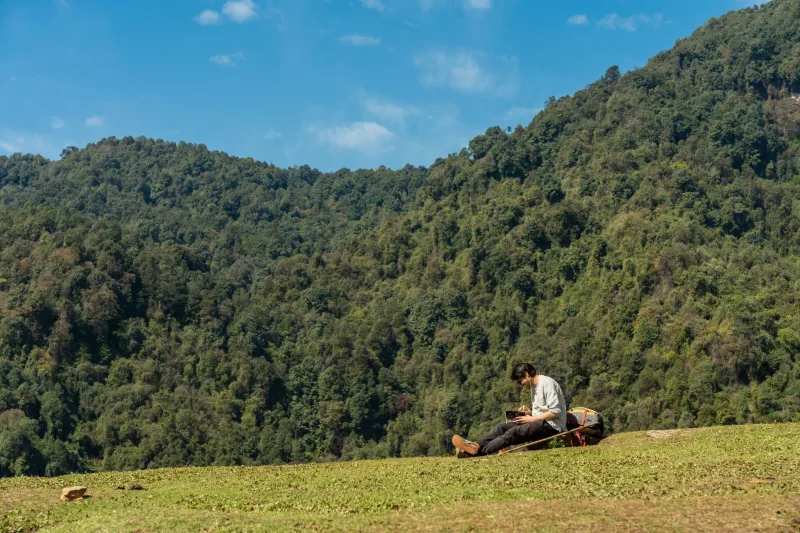
But it wasn't. He went on his hike. I stayed behind with my book and a cup of coffee and had one of the most genuinely relaxing afternoons I can remember. When he came back, we were both in better moods than we'd been in all week. We cooked dinner together and actually talked — really talked — instead of just coexisting.
That was the turning point.
The Actual Rules We Set (They're Pretty Simple)
After Colorado, we sat down and got specific. Not in a clinical, contractual way — more like a honest conversation where we finally said the quiet parts out loud. Here's what we landed on.
Ask, don't disappear. If one of us needs solo time, we say so. Directly. Not with a sigh or a hint or a passive "I'm fine." Just: Hey, I think I need a few hours to myself today. No guilt trip attached, no explanation required beyond that.
The other person doesn't get to make it weird. This one was mostly for me. When Benny says he needs space, my job is not to pout or pepper him with questions about whether I did something wrong. His need for alone time is not a commentary on me. We had to practice this one a lot before it felt natural.
Solo time is planned, not punished. Especially on trips, we now actually build in windows where we're not attached at the hip. Sometimes that looks like one of us going to a museum the other isn't excited about. Sometimes it's just an afternoon where we split up and agree to meet for dinner. Planning it in advance takes the sting out of it — it doesn't feel like rejection when it's already on the itinerary.
No check-ins unless something's actually wrong. This sounds small but it matters. If Benny is off on his own for a few hours, I'm not texting every forty minutes. We trust each other to be adults. Constant check-ins defeat the whole purpose.
Reunions are treated like reunions. Okay, this one might sound a little dramatic, but hear us out. When we come back together after solo time, we actually reconnect. We ask each other what we did, what we saw, how it felt. We don't just pick up where we left off like nothing happened. That reentry matters.
What Changed When We Actually Followed Through
Honestly? Almost everything got better.
The biggest shift was that our shared time started feeling more intentional. When you've had a few hours to yourself, you actually want to be around the other person again. You have things to say. You've had thoughts that weren't shaped by someone else's presence. You come back a little more like yourself.
Our trips improved dramatically. We stopped trying to force identical enthusiasm for every single activity and started letting each other follow their interests without guilt. Benny has spent whole mornings at gear shops I have zero interest in. I've wandered through neighborhoods taking photos while he found a spot to sit and journal. We meet up later and both of us are genuinely happy — not performing happiness, actually feeling it.
Our creative work changed too. A lot of what ends up on this site comes from individual experiences we then bring back to each other. Some of our best content has started with one of us going off alone, noticing something, sitting with it, and then sharing it later. That solo processing time feeds the collaborative work in ways we didn't expect.
The Guilt Is the Hardest Part to Shake
We'd be lying if we said it was all easy. The guilt is real, especially in the beginning. There's a cultural script that says a happy couple does everything together, that wanting space means something is broken. That script is wrong, but it's loud.
What helped us was reframing the whole thing. Needing solo time isn't a sign that you don't love your partner — it's a sign that you're a whole person outside of the relationship. And whole people make better partners. It's that simple.
We also had to be honest about the fact that we're both introverts in different ways. Benny recharges through physical solitude — long hikes, quiet mornings, time without conversation. I recharge through creative solitude — reading, writing, wandering without a destination. Neither of those things is compatible with constant togetherness, and that's okay.
What We'd Tell Anyone Starting This Conversation
If you're in a partnership where solo time feels like a forbidden topic, start small. Pick one low-stakes situation — a weekend morning, an afternoon on a trip — and try it. See what happens when you each do your own thing for a few hours and then come back together.
Chances are, you'll both feel better. And that feeling is hard to argue with.
We're not experts in relationships. We're just two people who figured out, a little later than we probably should have, that loving someone well sometimes means knowing when to give them room to breathe. And then actually doing it.
The adventures we take together are better because of the ones we take alone. That's not a contradiction — it's just how we work.