We Spent Money Trying to Fix Our Life Together — Here's the Honest Scorecard
There's a particular kind of optimism that hits you right before you click "Add to Cart." It's the feeling that this thing — this specific planner, this piece of equipment, this app subscription — is going to be the thing that finally gets you two on the same page. You can almost picture it: the organized mornings, the stress-free trips, the shared routines that just work.
We have felt that optimism many, many times.
And we have been wrong about it almost as many times.
But not always. That's the complicated part. Some of the stuff we bought genuinely changed how we operate as a couple. Some of it sits in a closet or auto-renews on a credit card we barely check. So we figured it was time to actually sit down and be honest about which was which — not to shame ourselves, but because we genuinely think this kind of transparency is more useful than another "10 products that changed our life" list.
Here's our real scorecard.
The Travel Organization Phase (Mixed Results)
Anyone who's traveled with a partner knows the specific chaos of packing for two people who have completely different systems — or in our case, one person with a system (Katie) and one person who considers "throwing everything in the night before" a system (Benny).
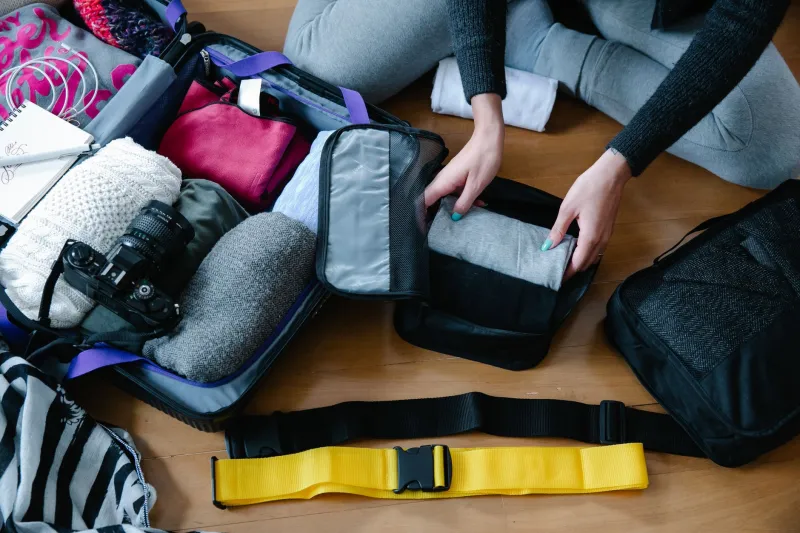
We bought packing cubes. Multiple sets, actually, because the first set apparently needed a backup set. Verdict? Actually great. This is one of those purchases that sounds absurdly boring until you're at a hotel and you can find your socks without dismantling the entire suitcase. The cubes became non-negotiable fast, and we've replaced them once in several years because we use them so constantly.
We also bought a shared travel wallet — one of those flat organizers meant to hold both passports, cards, and documents in one place. The idea was that whoever was "on logistics" for a given trip would carry it and we'd stop doing the frantic pocket-pat at every checkpoint. In theory, brilliant. In practice, we argued about who had it, lost it twice in the same airport, and now it lives in a drawer. Benny still does the pocket-pat. Some things are immune to products.
The Fitness Equipment Era (Mostly Gathering Dust)
During a stretch when we were both working from home and feeling the particular restlessness that comes from never leaving the apartment, we decided we were going to get into fitness together. This felt like a great couple's project. It was not.
We bought resistance bands, a set of adjustable dumbbells, and — the crown jewel of optimistic purchasing — a pull-up bar that mounts in a doorframe. The dumbbells get used occasionally, mostly by Benny when he's watching TV and wants to feel slightly less sedentary. The resistance bands came with a laminated workout card that we looked at once. The pull-up bar is currently holding a collection of reusable bags in the hallway.
Here's what we've figured out about fitness gear specifically: buying equipment does not create a habit. It creates the feeling of having made progress toward a habit, which is sneakily satisfying in the short term and completely useless in the long term. What actually got us moving more was committing to a single 20-minute walk after dinner most nights. Free. No equipment. Still doing it.
The Productivity App Graveyard
At some point we became convinced that our communication as a couple could be optimized with the right app. We tried a shared task manager to coordinate household stuff. We tried a budgeting app that was supposed to finally make us both feel in control of our money. We tried a shared calendar app that was different from the one we already used because it had better color coding.
The budgeting app actually stuck — we still use a version of this, though we've switched platforms twice. Having a single place where we can both see where money is going without having to have a formal money conversation every time something comes up has been quietly significant. It didn't fix our finances, but it removed a layer of friction from talking about them.
Everything else lasted about three weeks before one of us stopped updating it, which made it useless for the other, which made both of us stop. The lesson here seems to be that shared digital tools only work if both people are equally bought in from the start — and "I'll try it if you want" is not equally bought in.
The One Purchase We Didn't Expect to Matter
A few years ago, mostly on a whim, we bought a decent coffee setup for home — a grinder, a pour-over kit, better beans. Neither of us had any particular feelings about coffee as a ritual. We just wanted to stop spending so much at the coffee shop down the street.
This turned into something we didn't see coming. Weekend mornings now have a shape to them. Whoever gets up first makes coffee, the other one eventually wanders out, and there's this slow, unhurried 20 minutes before the day starts where we're just there together without phones or plans. It sounds small. It has become one of our favorite parts of the week.
We did not buy a coffee setup to improve our relationship. We bought it to save twelve dollars. But it created a ritual, and the ritual created something worth protecting.
What We've Actually Learned About Buying Stuff to Solve Problems
The honest pattern, looking back at all of it, is this: purchases that work tend to reduce friction around something we were already trying to do. The packing cubes worked because we were already traveling — they just made it less annoying. The budgeting app worked because we already wanted to talk about money — it just gave us a shared language. The coffee setup worked because we already wanted slow mornings — it just gave us a reason to have them.
The purchases that didn't work were almost always attempts to create a behavior from scratch. Buy the equipment, become a person who works out. Download the app, become a person who has organized tasks. It doesn't work that way, and we've spent enough money learning that lesson that we feel qualified to pass it along.
None of this means stop buying things. It means get honest about whether you're buying something to support a life you're already living or to feel like you're building a life you haven't started yet. That question has saved us more money — and more disappointment — than any product ever could.
And if you're on the fence about packing cubes, just get the packing cubes. That one we'll stand behind completely.